
Indian stock market benchmarks Sensex and Nifty rebounded strongly after a two-day decline, driven by falling crude oil prices and positive global cues amid hopes of de-escalation in the Middle East.

West Asia conflict triggers sharp sell-off in Indian markets, with realty, banking and auto stocks leading losses amid energy shock fears.

Sensex plunges over 1,400 points and Nifty slips near 22,250 amid Trump's Iran threat, rising crude oil prices, and FII selling. Here are the key reasons behind today's market crash.
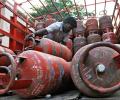
Delhi Police have registered multiple FIRs and seized hundreds of LPG cylinders in a crackdown on illegal storage, refilling, and black marketing operations amid concerns of potential supply shortages.

The primary objective should be to figure out a way to grow at 7 to 7.5 per cent with inflation around 4 per cent. Any policy that can help us get there must be experimented with. Those that work should stay. Those that do not should go, suggests Karan Bhasin.

Reserve Bank of India (RBI) Governor Sanjay Malhotra stated that recent regulatory measures to address foreign exchange market volatility, such as capping banks' net open positions, are temporary and aligned with current market conditions, not signalling any structural shift in policy.

Accenture's revised annual revenue growth forecast and weaker-than-expected fourth-quarter guidance have sent shockwaves through the Indian IT sector, causing major IT stocks and the Nifty IT index to tumble significantly.

The Indian rupee crashed to a record closing low against the US dollar due to rising global crude oil prices, a strengthening dollar, and geopolitical tensions in the Middle East.

India's banking system is grappling with a persistent liquidity surplus exceeding Rs 5 trillion, driven by significant government spending and bond redemptions, leading market participants to anticipate the Reserve Bank of India will step up Variable Rate Reserve Repo operations to manage the excess funds.

Indian equity markets experienced a volatile session, with the Sensex and Nifty recovering some ground after a significant plunge the previous day. Gains were driven by PSU bank, IT, and metal stocks, but concerns over rising fuel prices and geopolitical tensions limited the recovery.

Civil Aviation Minister K Rammohan Naidu announced that public sector oil marketing companies will implement a partial and staggered increase in jet fuel prices for domestic airlines, aiming to protect passengers from steep fare hikes.

Indian stock markets tumbled sharply with the Sensex falling 800 points and nearly 4 lakh crore wiped out in a single session. Here are the 6 key factors, including rupee weakness and global cues, behind the crash.

Congress leader Rahul Gandhi on Monday launched a scathing attack on Prime Minister Narendra Modi over the latest fuel hike, saying mehangai manav has struck again and he has just one job of making promises during elections and attacking people's pockets at other times.

Foreign Portfolio Investors (FPIs) have withdrawn Rs 27,048 crore from Indian equities so far in May, bringing the total outflows for 2026 to Rs 2.2 lakh crore, driven by global macroeconomic and geopolitical uncertainties.
Indian stock markets tumbled sharply with the Sensex falling 800 points and nearly 4 lakh crore wiped out in a single session. Here are the 6 key factors, including rupee weakness and global cues, behind the crash.

Analysts predict that the ongoing conflict in West Asia, crude oil price fluctuations, and the US Federal Reserve's interest rate decision will significantly influence the Indian equity market this week.

Indian benchmark indices Sensex and Nifty closed marginally lower due to profit-taking, following the Reserve Bank of India's decision to keep the repo rate unchanged while lowering its growth expectations for the current fiscal year and forecasting higher inflation.

Uncertainty surrounds the US-Iran talks as a two-week ceasefire approaches its end. Pakistan is attempting to mediate, but tensions remain high after a recent naval incident.

'Markets never fully lose hope. But an important shift could come if the Strait remains closed -- moving from high prices to no prices.'

A senior government official asserts India's independence in purchasing Russian oil, stating that US sanctions waivers merely remove friction but do not dictate India's energy policy. The official highlights India's commitment to energy security and affordability for its citizens.

The Reserve Bank of India (RBI) has debunked reports of gold sales, stating that its physical stock of gold remains unchanged at 880.52 tonnes, countering claims of selling approximately USD 12 billion to protect foreign-currency reserves.

Pakistan's Punjab government has announced the reopening of all public and private educational institutions after implementing fuel-saving measures due to the conflict in West Asia. The decision comes as fuel supply stabilises and the government secures national fuel stocks.

The Indian rupee depreciated 16 paise to settle at a fresh lifetime low of 96.86 against the US dollar, marking its ninth consecutive session of decline, driven by elevated global crude prices and a strong dollar.

Indian equity markets experienced a significant downturn, with the Sensex and Nifty plummeting due to rising crude oil prices, geopolitical tensions in West Asia, and continuous foreign fund outflows.

Calling such reports baseless, Finance Minister Nirmala Sitharaman said there was no such move under consideration.

'The MPC is likely to prioritise the key mandate, which is inflation, while relying on other instruments to stabilise the currency and bond markets.'

Indian stock market indices Sensex and Nifty closed nearly 1 per cent higher, marking their third consecutive day of gains, supported by a slight decrease in crude oil prices and positive global market trends.

At Kolga Aabla, the closest beach to her grandmother's home, at the edge of a birch forest, we immersed her balance ashes. It was a sombre, precious day for both of us. But a day that also brought long-needed closure. My mother's spirit, chained for so many years in a Parkinson's-locked body, was free. But my father came back from the beach a visibly older man.
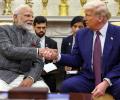
Amidst escalating tensions with Iran, the US has granted India a temporary 30-day waiver to continue purchasing Russian oil, aiming to stabilise global energy markets and encourage future US oil imports by India.

"There is a sharp jump that we have seen in bookings of EVs... The jump, at least in our case, in just two months, it is about 2 to 2.5 times of what it used to be"

External Affairs Minister S Jaishankar discussed the West Asia conflict and its impact on energy supplies with his Russian counterpart Sergey Lavrov and EU's Foreign Policy chief Kaja Kallas.

Major paint companies in India, including Asian Paints, Berger Paints, Akzo Paints, and Kansai Nerolac, have announced price hikes ranging from 1% to 8% across various product lines, effective from mid-March to late April, in response to persistently high crude oil and gas prices.

US President Donald Trump has threatened to target Iran's civilian energy infrastructure, including power plants, oil wells and Kharg Island, if Tehran does not reopen the Strait of Hormuz.

Indian equity benchmark indices, Sensex and Nifty, ended marginally lower in a volatile trading session, surrendering early gains due to profit-taking in blue-chip stocks and persistent macroeconomic concerns, despite positive global cues.

Indian benchmark equity indices experienced a significant downturn, with the Sensex plummeting over 800 points and the Nifty falling sharply, driven by rising crude oil prices, geopolitical tensions, and foreign capital outflows.
Indian stock market indices Sensex and Nifty experienced a significant decline, driven by rising crude oil prices, sustained foreign fund outflows, and selling pressure in major bank stocks.

The petroleum ministry on Friday reaffirmed the government's commitment to maintaining stable petrol and diesel prices, despite India's high dependence on imports.

Tata Motors' MD and CEO, Girish Wagh, has identified rising diesel prices as the most significant threat to India's commercial vehicle (CV) industry recovery, despite the sector recently surpassing its pre-FY19 wholesale peak. Diesel costs account for 25-50% of a truck operator's total cost of ownership, making any increase a critical concern for fleet economics.

The Reserve Bank of India (RBI) reported a significant 52 per cent year-on-year increase in gains from foreign exchange transactions, reaching 1.69 trillion in FY26. This surge occurred despite the central bank selling a gross $195 billion in the spot market to manage rupee volatility, which saw a 9.85 per cent depreciation.

When asked about Bessent's announcement allowing certain Russian oil sales to India and whether the US is considering any other moves, including tapping the Strategic Petroleum Reserve (SPR), Trump said, "If there were some, I would do it just to take a little of the pressure off."
